



Bcl-xL
Bcl-xL, encoded by BCL2L1, is a major anti-apoptotic member of the BCL-2 family that regulates mitochondrial apoptosis through interactions with pro-apoptotic proteins and preservation of mitochondrial integrity[1][2]. Mechanistically, Bcl-xL suppresses mitochondrial outer membrane permeabilization, limits BAX/BAK activation, and modulates cellular bioenergetics, calcium signaling, and autophagy, linking survival pathways with metabolic adaptation under cellular stress[1][3]. Beyond canonical apoptosis control, Bcl-xL interacts with Beclin-1 and intracellular calcium regulators, including IP3 receptors and VDAC1, thereby influencing autophagy, endoplasmic reticulum-mitochondrial communication, and stress responses[1][4]. In disease models, elevated Bcl-xL expression promotes tumor cell survival, therapeutic resistance, angiogenesis, and metastatic progression across hematologic malignancies and solid tumors, including melanoma and breast cancer[1][5]. Compared with related BCL2L1 splice isoforms, Bcl-xL functions predominantly as a pro-survival protein, whereas the alternatively spliced Bcl-xS isoform exhibits pro-apoptotic activity, highlighting the biological significance of isoform-specific regulation in apoptosis research[2][6]. For experimental applications, Bcl-xL is a validated target of BH3 mimetics and other apoptosis-directed strategies, and its inhibition is widely used to investigate mitochondrial apoptotic priming, drug resistance mechanisms, and cancer cell dependency on anti-apoptotic signaling networks[1][7].
References:
- [1]. Silva JPN, et al. BCL-2 and BCL-xL in Cancer: Regulation, Function, and Therapeutic Targeting. Int J Mol Sci. 2026;27(2):1123.
- [2]. Warren CFA, et al. BCL-2 family isoforms in apoptosis and cancer. Cell Death Dis. 2019 Feb 21;10(3):177. [Content Brief]
- [3]. Li M, et al. Bcl-XL: A multifunctional anti-apoptotic protein. Pharmacol Res. 2020;151:104547.
- [4]. Bcl-xL gene information from NCBI.
- [5]. Kim TJ, et al. Risk of Second Primary Malignancies among Patients with Early Gastric Cancer Exposed to Recurrent Computed Tomography Scans. Cancers (Basel). 2021 Mar 7;13(5):1144. [Content Brief]
- [6]. Chen W, et al. Alternative splicing of BCL-X and implications for treating hematological malignancies. Oncol Lett. 2021;22(4):670. [Content Brief]
- [7]. Campbell KJ, et al. Targeting BCL-2 regulated apoptosis in cancer. Open Biol. 2018;8(5):180002. [Content Brief]
-
Bcl-xL Related Products (123)
Related Products (123)

-
Antibodies (1)
-
BM-1074
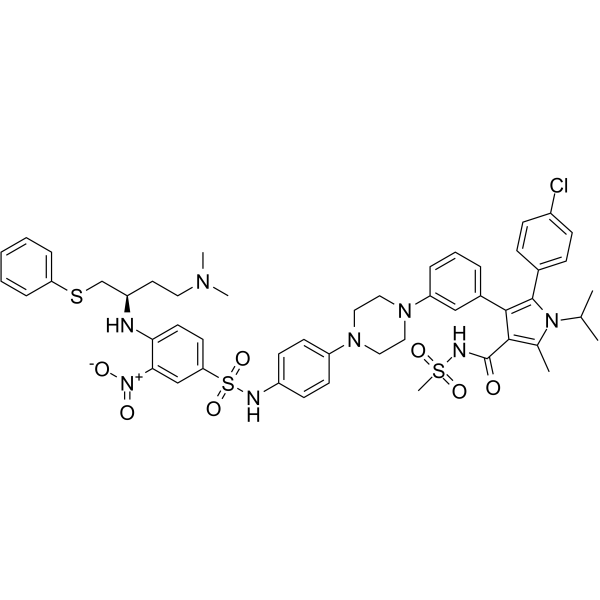 0 ImagesCat. No.: HY-13846CAS No.: 1391108-10-3BM-1074 is a potent and specific Bcl-2/Bcl-xL inhibitor with Ki values of < 1 nM and IC50 values of 1.8 nM and 6.9 nM for Bcl-2 and Bcl-xL, respectively. BM-1074 induces apoptosis, and exhibits antiproliferative activity against four small-cell lung cancer cell lines (H146, H1963, H187 and H1417) with IC50 values of 1-2 nM.
-
Chelerythrine hydroxide
 0 ImagesChelerythrine hydroxide is an alkaloid, acts as a potent and selective Ca2+/phospholopid-dependent PKC antagonist, with an IC50 of 0.7 μM. Chelerythrine hydroxide inhibits the BclXL-Bak BH3 peptide binding with IC50 of 1.5 μM. Chelerythrine hydroxide triggers Apoptosis and Autophagy. Chelerythrine hydroxide has antitumor, antidiabetic and anti-inflammatory activity. Chelerythrine hydroxide shows antibacterial activities against Gram-positive bacteria, Staphylococcus aureus (SA), MRSA.
-
PROTAC BcI-2/BcI-xI Degrader-1
 0 ImagesCat. No.: HY-158551CAS No.: 3034200-49-9PROTAC Bcl-2/Bcl-xL Degrader-1 is a Bcl-2/Bcl-xL PROTAC degrader with a DC50 of 11.28 nM against Bcl-xL. PROTAC Bcl-2/Bcl-xL Degrader-1 promotes ubiquitination and degradation of Bcl-2/Bcl-xL. It exhibits anticancer activity against acute lymphoblastic leukemia. PROTAC Bcl-2/Bcl-xL Degrader-1 can be used in the research of BCL-2-mediated or BCL-2-dependent diseases.
-
BCL-xL ligand 4
 0 ImagesCat. No.: HY-184547CAS No.: 3027548-08-6BCL-xL ligand 4 is a BCL-xL ligand that can be used for the synthesis of PROTACs, such as PZ703b (HY-115718), PZ703b TFA (HY-115718A), and PZ703b hydrochloride (HY-115718B).
-
EGFR-IN-197
 0 ImagesCat. No.: HY-181502CAS No.: 3060883-16-8EGFR-IN-197 is an EGFR inhibitor with IC50 values of 19.5 nM and 12.0 nM against EGFRL858R/T790M and EGFRL858R/T790M/C797S, respectively. EGFR-IN-197 arrests the cell cycle of NCI-H1975 cells at the G2/M phase, while inhibiting their proliferation, colony formation and migration; it also inhibits mitochondrial translocation and upregulates mitochondrial H2S levels. EGFR-IN-197 disrupts anti-apoptotic signaling pathways by regulating apoptosis-related proteins; it induces DNA damage and activates pro-apoptotic pathways to trigger apoptosis. EGFR-IN-197 can be used in studies related to non-small cell lung cancer (NSCLC).
-
Apoptosis inducer 62
 0 ImagesCat. No.: HY-184302Apoptosis inducer 62 is an apoptosis inducer that reduces the expression levels of anti-apoptotic proteins Bcl-2 and Bcl-xL. Apoptosis inducer 62 induces ROS accumulation, mitochondrial membrane potential depolarization, DNA damage, cell cycle arrest. Apoptosis inducer 62 exhibits activity in colorectal tumor xenograft models. Apoptosis inducer 62 can be used for research related to colorectal cancer.
-
Bcl-2-IN-11
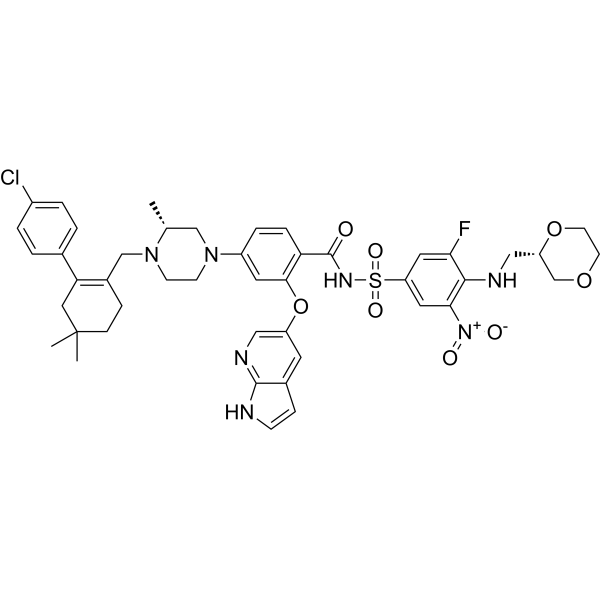 0 ImagesCat. No.: HY-153953CAS No.: 2760536-88-5Bcl-2-IN-11 (compound 6) is a potent and selective Bcl-2 activity inhibitor, with an IC50 of 0.9 nM. Bcl-2-IN-11 shows weak inhibition of Bcl-xl (IC50 > 1000 nM). Bcl-2-IN-11 can be used for the research of a variety of cancers caused by abnormal overexpression of Bcl-2 family proteins: especially malignant hematologic diseases of acute lymphoid leukemia, etc. Bcl-2-IN-11 can also avoid toxic side effects caused by Bcl-xl inhibition, such as thrombocytopenia.
-
PI3K-IN-58
 0 ImagesCat. No.: HY-172886CAS No.: 3067572-78-2PI3K-IN-58 (Compound 17f) is a PI3Kα inhibitor (IC50: 0.039 μM). PI3K-IN-58 exhibits significant antiproliferative effects on PC-3, 22RV1, MDA-MB-231 and MDA-MB-453 cell lines with IC50s of 3.48 μM, 1.06 μM, 2.21 μM and 0.93 μM, respectively. PI3K-IN-58 induces apoptosis by downregulating the expression levels of anti-apoptotic proteins Bcl-XL and Bcl-2 and upregulating the expression of anti-apoptosis protein BAX. PI3K-IN-58 can be used in PI3K-targeted cancer research.

-
Stigmast-5-en-3-ol
 0 ImagesStigmast-5-en-3-ol induces cancer cell apoptosis and inhibits proliferation by increasing the production of Bax, Caspase-9, p53, and PARP cleavage and reducing Bcl-xl expression. Stigmast-5-en-3-ol exhibits potent inhibitory activity against glucoamylase and α-amylase and possesses high antioxidant activity. Stigmast-5-en-3-ol can be used in the research of diseases such as leukemia, breast cancer, type 2 diabetes, and obesity.
-
PROTAC HDAC3 degrader-1
 0 ImagesCat. No.: HY-181767CAS No.: 3133883-15-2PROTAC HDAC3 degrader-1 is a selective PROTAC degrader targeting HDAC3 with a DC50 of 30.73 nM. PROTAC HDAC3 degrader-1 induces degradation of HDAC3 via the ubiquitin-proteasome system. PROTAC HDAC3 degrader-1 promotes apoptosis, induces DNA damage, and downregulates anti-apoptotic proteins Mcl-1 and Bcl-xL. PROTAC HDAC3 degrader-1 can be used for the research of acute myeloid leukemia.
-
MA203
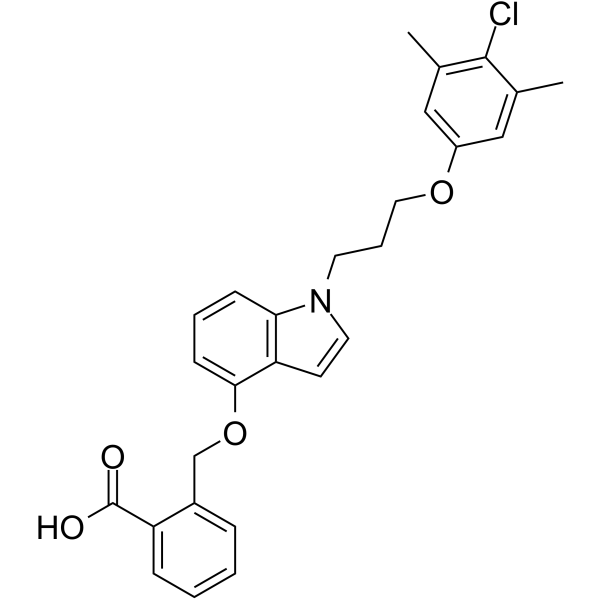
 0 ImagesCat. No.: HY-179157MA203 is a selective CHK1 PROTAC degrader. MA203 targets activated CHK1 for degradation by recruiting the CRBN E3 ubiquitin ligase, thereby completely abolishing both its catalytic and non-catalytic functions and ultimately triggering DNA replication catastrophe and apoptosis. MA203 can be used in research related to pancreatic ductal adenocarcinoma, colorectal cancer, and acute lymphoblastic leukemia.

-
PROTAC Bcl-xL degrader-1
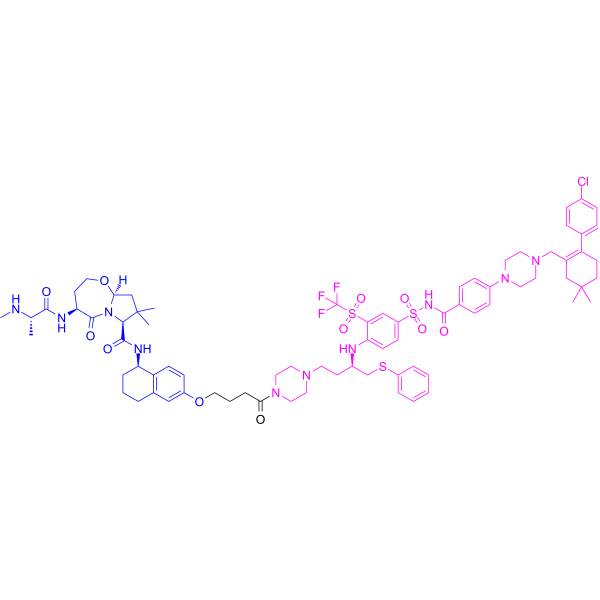 0 ImagesCat. No.: HY-131188CAS No.: 2450351-07-0PROTAC Bcl-xL degrader-1 is a PROTAC that comprises a Bcl-xL (Bcl-2 family member) ligand binding group, a linker and an IAP E3 ligases binding group. PROTAC Bcl-xL degrader-1 is a potent Bcl-xL degrader, and shows toxicity for human platelets and MyLa 1929 cells with IC50 values of 62 nM and 8.5 μM, respectively.


-
Anticancer agent 201
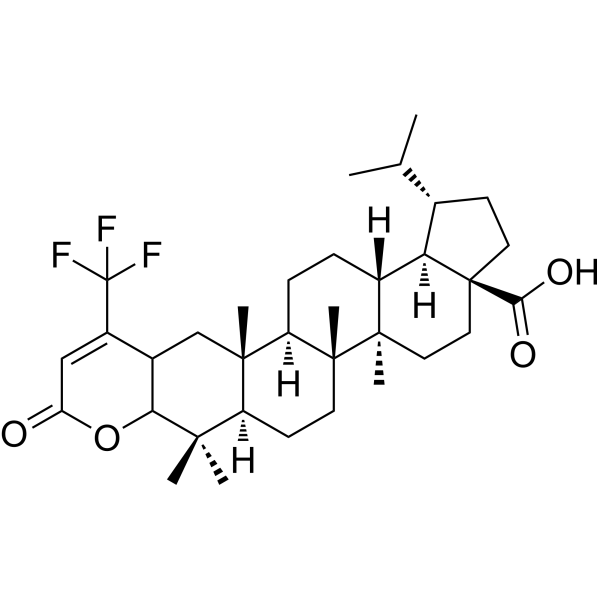 0 ImagesCat. No.: HY-163435Anticancer agent 201 (Compound 2f) has IC50 values in the low micromolar range for multiple tumor cell lines. Anticancer agent 201 is highly cytotoxic to CCRF-CEM cells in vitro, inducing apotosis by activating caspase-3 in the intrinsic mitochondrial pathway and lysis of PARP, as well as reducing the expression of Bcl-2 and Bcl-XL proteins. Anticancer agent 201 can be used in cancer research.
-
Dehydrobruceine B
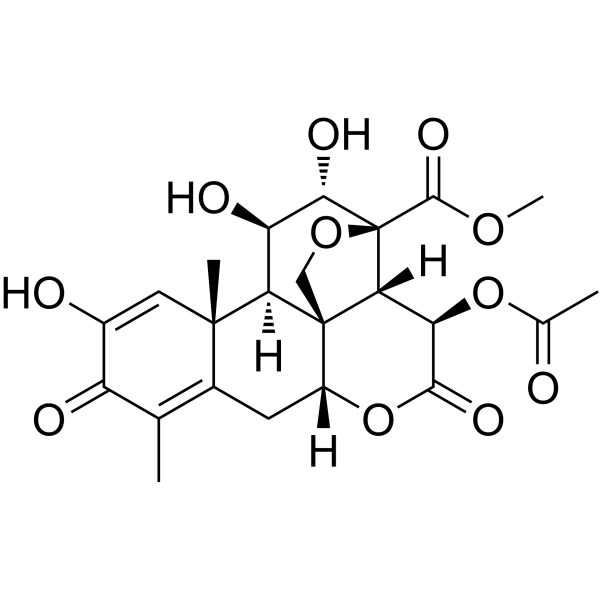 0 ImagesCat. No.: HY-N10313CAS No.: 53730-90-8Dehydrobruceine B, a quassinoid, can be isolated from Brucea javanica. Dehydrobruceine B shows a synergistic effect with Cisplatin (HY-17394) to induce apoptosis via mitochondrial method. Dehydrobruceine B increases apoptosis-inducing factor (AIF) and Bax expression and suppresses Keap1-Nrf2.
-
PZ15227
 0 ImagesCat. No.: HY-152179CAS No.: 2143464-25-7PZ15227 is a potent and selective Bcl-XL PROTAC degrader with a DC50 of 46 nM, and its Ki values for Bcl-XL, Bcl-2 and Bcl-w are 1.90 nM, 3.52 nM and >1 mM, respectively. PZ15227 recruits Bcl-XL to CRBN, induces polyubiquitination of Bcl-XL and promotes its proteasome-dependent degradation, thereby selectively killing senescent cells that rely on Bcl-XL for survival without causing severe thrombocytopenia. PZ15227 can be used for research related to age-related diseases, aging and renal cancer.




